
Family warns parents to remain vigilant to the signs and symptoms of Strep A after harrowing ordeal
A West London family is raising awareness of the dangers of invasive group A strep – a serious bacterial infection that can trigger sepsis – after a harrowing ordeal with their daughter, ahead of winter when infections are typically more common.
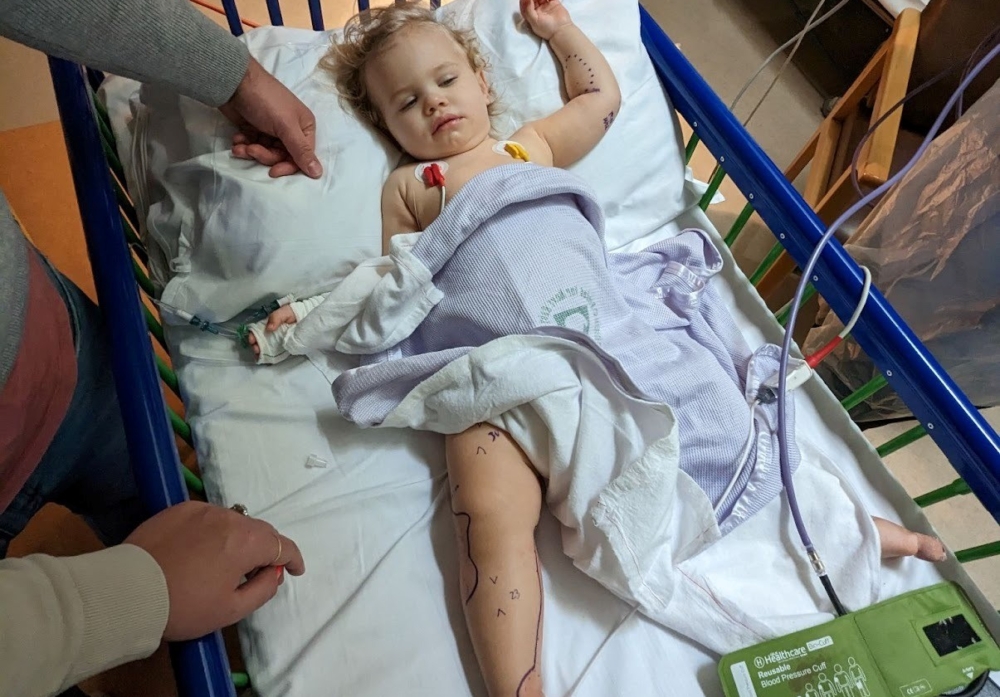
Sofia, then aged 17 months, contracted the illness in February 2023 – with her symptoms initially seeming like a cold. A few days later, Sofia wasn’t bearing weight on her legs, her fever had increased, she was experiencing slightly raspy breathing and was becoming more and more lethargic.
Feeling something wasn’t right, Sofia’s family took her to A&E at Chelsea and Westminster Hospital where she was quickly assessed and given IV antibiotics as her condition continued to deteriorate. By this point, Sofia was barely conscious, her body almost entirely swollen, and with rashes spreading all over.
Following rapid conversations with teams across the hospital to diagnose Sofia, action was taken to treat for invasive group A strep – a move which ultimately helped save her life. The Infection triggered sepsis, a life-threatening inflammatory response to an infection that can damage its own tissues and organs.
Sofia was so unwell that she spent 7 weeks in hospital. During that time, her infected hip joint- caused by her illness – was operated on 4 times and she received 6 general anaesthetics.
During her stay at Chelsea and Westminster, Sofia’s parents said that the people caring for her were quick to identify and address problems that arose. Her family are incredibly grateful to clinicians for decisively treating for invasive group A strep causing sepsis when they did. In another 24 hours, the situation would likely have resulted in a loss of life.
While Strep A is a common type of bacteria spread by close contact with an infected person with most infections mild and easily treated, in serious cases if the bacteria becomes invasive, getting into the tissue and bloodstream, it can trigger life threatening sepsis .Early indicators of invasive group A strep include a high fever, muscle aches, localised muscle tenderness and diarrhoea or vomiting and these are also symptoms of sepsis, requiring urgent medical intervention.
Sofia’s mum Nikki said:
“We know we are the lucky ones. After Sofia’s battle with this illness, we are determined to raise awareness of invasive group A Strep and sepsis – both in parents and in health professionals – of the need for fast diagnosis and treatment. The symptoms can change and deteriorate very quickly – so trust your instincts and seek help if something doesn’t feel right. Ask the question, ‘Could it be sepsis?’”
“We also want to say a big thank you to everyone at Chelsea and Westminster Hospital, who helped save our daughter’s life. The decisive action by doctors in A&E to identify and treat invasive group A Strep and stop the deterioration of sepsis means that our little girl was well enough to walk down the aisle at our wedding this summer.”
Inspired and motivated by Sofia’s story, her family are now taking part in research studies to help understand more about infectious diseases and how they affect people differently.